

Coming when called
Learn the recall exercise and practise your dog’s return to you, first in familiar surroundings and then on walks.
Recorded course for your breed
Learn to teach your dog to come when called, walk beside you and stay in place. Watch the exercises and practise with your bulldog at your own pace.
22 lessons · permanent access
Learn the recall exercise and practise your dog’s return to you, first in familiar surroundings and then on walks.
Work on your dog’s position beside you, starting to walk and stopping. Practise these exercises on a lead.
Practise sit, down and stay. Gradually increase the distance and the time your dog waits.
About the course
For French Bulldog owners who want a structured approach to building engagement, teaching basic cues and developing their dog’s self-control.
Recall, walking to heel and staying in place. Clear exercises build the skills that make walks, communication and everyday life together easier.
Explore the exercises
A programme from the National School of Service Dog Training
About NSHSS and our approach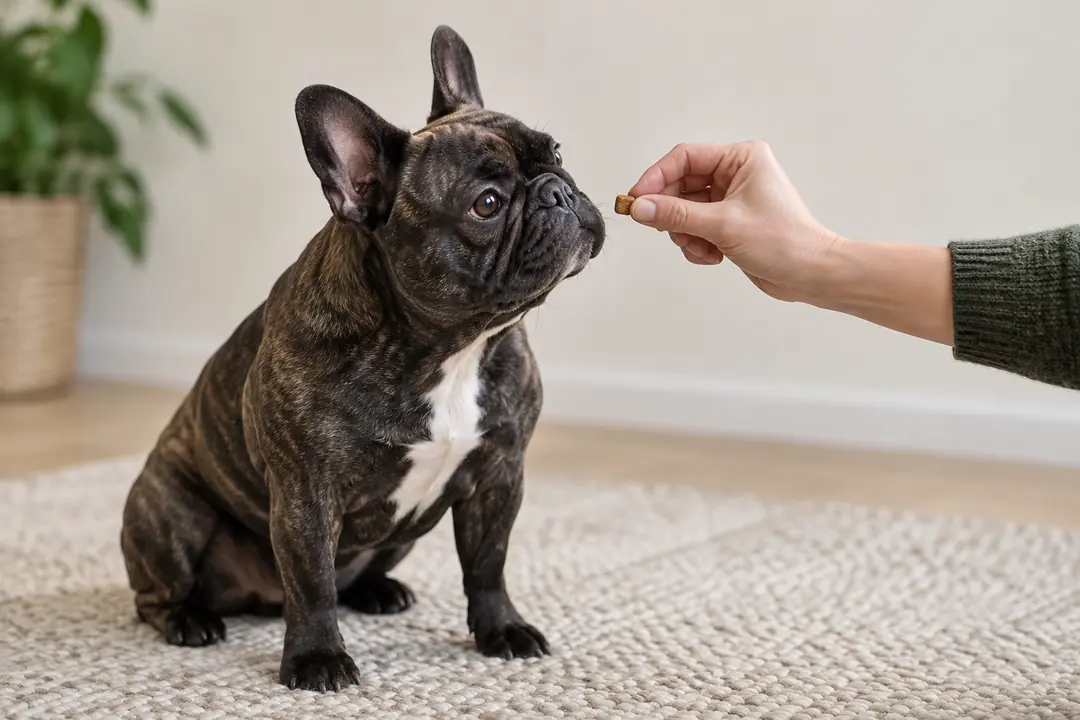
Course syllabus
22 video lessons, from walk preparation and first cues to retrieving and staying in position. Open a topic to see what the trainer explains.
These topics group related recordings. Each lesson opens separately in Goodboy. Build practice time and difficulty gradually, allowing for repetition, breaks and your dog’s readiness.
Price and accessThe introduction covers the approach to training a French bulldog. The trainer explains how to associate the collar and leash with walks and introduce a muzzle through treats and positive experiences.
A separate recording covers leash choice, length, hand position and the dog’s attention to its owner. It demonstrates a loose leash, brief corrective signals and rewarding the desired response.
First comes the recall itself: a cue, the owner moving backwards and a reward when the dog arrives. The trainer shows how to meet a small dog and time food and praise.
The next recording adds a sit in front using a hand lure. It covers the order of signals, reward timing and breaks between short sets of repetitions.
Starting from a recall and a sit in front, the dog pauses, goes around the owner and sits beside the left leg on the heel cue.
The recording explains body movement, transferring the leash behind your back and luring with food. The focus is on clear steps, rewarding the correct position and resting between repetitions.
Beside the owner’s left leg, the dog follows a food lure from its nose towards its paws. The trainer explains the direction of the hand movement so the dog lies down without moving forward.
The demonstration then returns to a sit, covers holding the position and shows reward timing. Pauses separate the actions, with familiar cues supporting the new exercise.
The dog stays sitting or lying down while the owner moves in front and gradually steps back. The example builds from 5 to 10, 20 and 40 seconds, with a few steps of distance.
You see the owner return to reward without losing the position. This is introductory stay work with gradual increases and a break after the exercise.
Play with an object becomes the basis for retrieving. The trainer demonstrates building interest, encouraging the dog to return with the object and briefly hold it in its mouth.
Practice footage covers returning, sitting, releasing and rewarding. It also explores preserving interest so coming back does not simply mean the game is over.
Three recordings develop movement beside the left leg: short stretches with a food lure, sitting at stops and turning. They demonstrate hand position, reinforcement and leash signals.
A continuation revisits familiar cues in a new place with people, dogs and distractions. The trainer alternates exercises with rest and returns to easier surroundings when introducing a new difficulty.
Two lessons cover changing position while walking at heel. The dog sits or lies down on cue as the owner turns to face it, initially staying close.
The explanation covers preparing the reward, luring, reinforcement and a short stay after the action. These steps prepare for moving farther away and working at a distance.
Three recordings connect returning with an object, sitting in front, holding, going around and sitting at the left leg. They also cover waiting before being sent for a thrown object and releasing on cue.
The trainer explains when to reveal food to avoid an early drop, and how to vary familiar cue sequences. Play and rest are included between repetitions.
Sit and down are practised facing the owner, initially one step away. The recording progressively increases the distance and time spent in each position.
It shows how a hand lure develops into a gesture, when to return with a reward and how to maintain the dog’s position. The lesson also revisits stays after cues given during movement.
Stays appear at different points of a retrieve: before being sent, holding the object in front of the owner and sitting at the left leg. Longer pauses alternate with shorter ones.
The recording gradually builds an individual stay to two minutes, with breaks and further sit/down practice. The trainer explains why every pause should not be equally long.
The next stage involves sitting in front of the owner while holding the retrieve object. The example builds through one, one and a half, two, two and a half, then three minutes.
Longer holds alternate with brief pauses elsewhere, varied sequences and rest. Three minutes is a later stage of the demonstrated exercise, not the starting expectation.
The final recording reviews familiar cues, including practice wearing a muzzle; retrieving is done separately. The trainer revisits the exercises with short pauses and rest.
The new element is refusing an offered treat on a prohibition cue and taking it when permitted. The demonstration varies “No” and “Okay” rather than using a fixed pattern, with leash control and the owner’s cues.
Learning format
No group timetable to follow. Keep access to the course and revisit any exercise as you practise.

A structured programme you can follow from home.
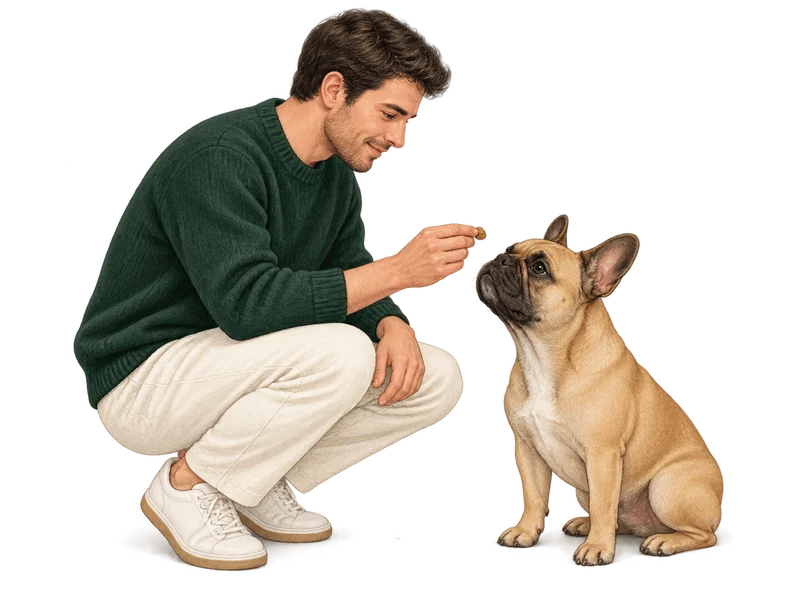
Put what you watch into practice with your dog. Regular training helps reinforce each skill.
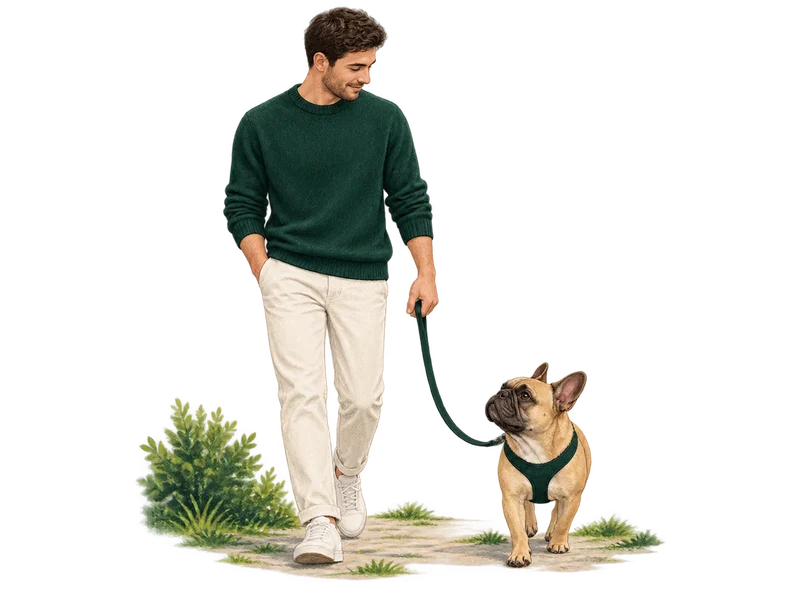
Watch the explanations again and practise whenever it suits you.
Start learning
Goodboy is the NSHSS learning platform. After payment, we will email you your sign-in details.
Check your email — it will be your login.
The button opens the WayForPay payment page.
After successful payment, we will email your access.
The course consists of 22 prerecorded lessons. Watch the material and practise with your dog at a time that suits you.
Access does not expire. You can revisit the recordings and review the material at your own pace.
All 22 video lessons are hosted on our own learning platform, Goodboy. Your account contains the French Bulldog course, a lesson list, a video player and viewing progress. Learn at your own pace and revisit any exercise.
After successful payment, you will receive an email with the platform link and login details. Open Goodboy in a browser on your phone or computer, sign in and start learning. For help, contact our manager through the platform chat.
Tell us about your dog and your goals using the enquiry form. The school will help you choose between a self-paced course and training with an instructor.